

The
president
of
Columbia
University
moved
all
classes
remote
for
Monday,
citing
ongoing
pro-Palestinian
protests
at
the
Ivy
League
school’s
Morningside
Heights
campus
and
increasing
reports
of
student
fear
in
calling
for
a
“reset.”
Protests
spilled
into
a
sixth
day
Monday
at
the
school,
and
have
been
marred
by
blanket
antisemitism,
threats
and
outsiders
descending
on
the
embattled
campus
to
promote
their
own
agendas,
President
Minouche
Shafik
wrote
in
a
letter
to
the
collegiate
community.
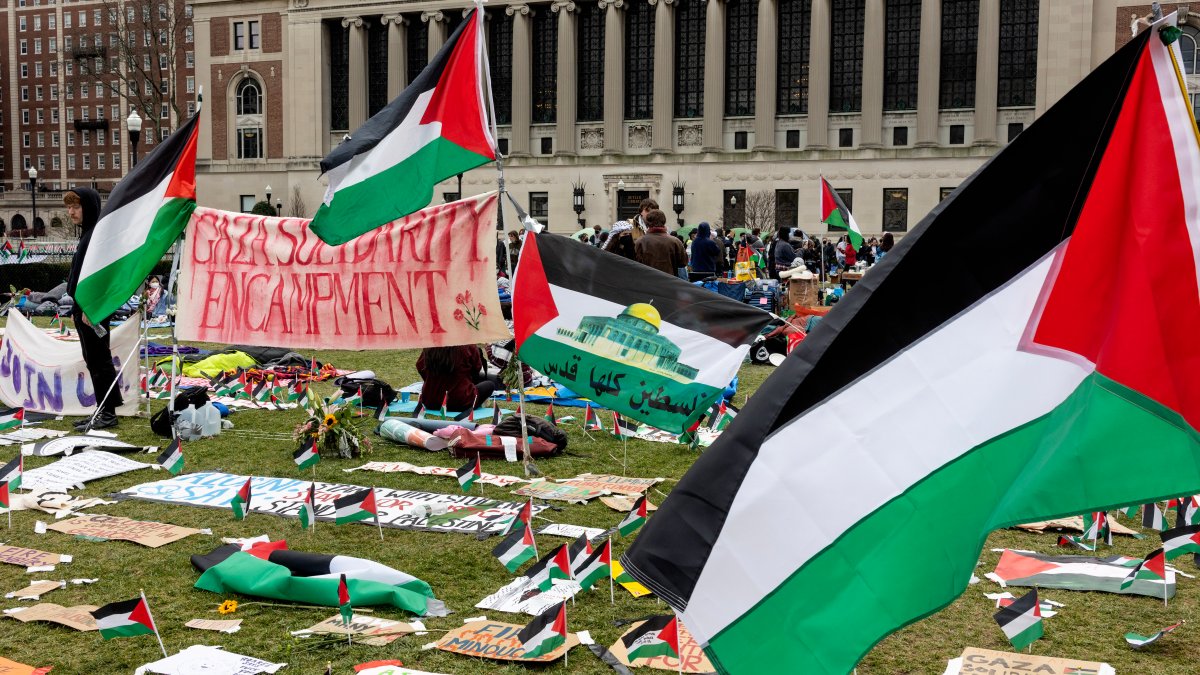
Demonstrators
initially
set
up
an
encampment
on
the
South
Lawn
ahead
of
Shafik’s
testimony
before
Congress
about
campus
antisemitism
in
the
wake
of
the
Oct.
7
Hamas
attack
on
Israel.
The
students
had
been
opposing
Israeli
military
action
in
Gaza
and
demanding
the
school
divest
from
companies
they
claim
“profit
from
Israeli
apartheid.”
By
Thursday,
Shafik
reported
to
police
that
their
presence
was
problematic
and
asked
for
NYPD
help
clearing
the
crowd.
More
than
100
protesters
were
arrested
that
afternoon.
In
her
letter
to
the
campus
community
Monday,
Shafik
said
she
was
“deeply
saddened”
by
the
goings-on
on
campus.
“Our
bonds
as
a
community
have
been
severely
tested
in
ways
that
will
take
a
great
deal
of
time
and
effort
to
reaffirm.
Students
across
an
array
of
communities
have
conveyed
fears
for
their
safety
and
we
have announced
additional
actions
we
are
taking
to
address
security
concerns,”
Shafik
wrote.
“The
decibel
of
our
disagreements
has
only
increased
in
recent
days.
These
tensions
have
been
exploited
and
amplified
by
individuals
who
are
not
affiliated
with
Columbia
who
have
come
to
campus
to
pursue
their
own
agendas.
We
need
a
reset.”
Acknowledging
the
heartache
over
the
devastation
in
the
Mideast,
Shafik
said
“we
should
be
having
serious
conversations”
and
will
have
those
conversations
about
how
Columbia
can
contribute.
But,
she
noted,
“we
cannot
have
one
group
dictate
terms
and
attempt
to
disrupt
important
milestones
like
graduation
to
advance
their
point
of
view.”
Shafik
urged
for
a
sitdown
—
and
compromise.
In
the
meantime,
Shafik
wrote,
“to
deescalate
the
rancor
and
give
us
all
a
chance
to
consider
next
steps,
I
am
announcing
that
all
classes
will
be
held
virtually
on
Monday.
Faculty
and
staff
who
can
work
remotely
should
do
so;
essential
personnel
should
report
to
work
according
to
university
policy.
Our
preference
is
that
students
who
do
not
live
on
campus
will
not
come
to
campus.”
Those
next
steps
are
expected
to
include
convening
a
working
group
of
deans,
university
administrators
and
faculty
members
to
try
to
bring
the
protest
crisis
to
a
solution.
Shafik
called
for
continued
peaceful
discussion
and
engagement.
She
also
said
that
while
she
understands
the
hesitancy
to
use
NYPD
to
manage
campus
protests,
she
also
said
she
knows
that
listening
to
the
rules
will
go
a
long
way
in
getting
voices
heard.
“We
should
be
able
to
do
this
ourselves,”
Shafik
acknowledged.
It’s
not
clear
how
long
classes
might
stay
remote.
“Over
the
past
days,
there
have
been
too
many
examples
of
intimidating
and
harassing
behavior
on
our
campus,”
she
added.
“Antisemitic
language,
like
any
other
language
that
is
used
to
hurt
and
frighten
people,
is
unacceptable
and
appropriate
action
will
be
taken.
We
urge
those
affected
to report
these
incidents
through
university
channels.
We
also
want
to
remind
everyone
of
the support
available
for
anyone
adversely
affected
by
current
events.”
No
significant
injuries
have
been
reported
amid
the
demonstrations,
though
the
temperature
is
heightening.
Mayor
Eric
Adams
said
Sunday
evening,
as
a
rabbi
urged
Jewish
students
to
flee
the
Columbia
campus,
that
he
was
“horrified
and
disgusted
with
the
antisemitism
being
spewed
at
and
around
the
Columbia
University
campus.”
In
a
post
on
X,
the
Democrat
said
he
had
instructed
the
NYPD
to
look
into
any
illegal
activity
and
arrest
anyone
found
to
be
breaking
the
law.
Adams
also
insisted
“hate
has
no
place
in
our
city.”
Antisemitism
on
college
campuses
Last
week,
Shafik
took
a
firm
stand
against
antisemitism
as
she
parried
accusations
from
Republicans
who
see
Columbia
campus
as
a
hotbed
of
bias
—
but
she
hedged
on
whether
certain
phrases
invoked
by
some
supporters
of
Palestinians
rise
to
harassment.
She
arrived
on
Capitol
Hill
four
months
after
a
similar
hearing
that
led
to the
resignations
of
two
Ivy
League
presidents.
From
the
start,
Shafik
took
a
more
decisive
stance
than
the
presidents
of
Harvard
and
the
University
of
Pennsylvania,
who
gave
lawyerly
answers
when
asked
if
calls
for
the
genocide
of
Jews
would
violate
school
policies.
A
new
report
from
the
Anti-Defamation
League
finds
antisemitism
has
skyrocketed
to
record
levels
across
the
country,
including
the
tri-state,
as
antisemitic
incidents
in
New
York
and
New
Jersey
more
than
doubled
last
year.
The
areas
with
some
of
the
highest
increases:
Manhattan
and
Bergen
County. NBC
New
York’s
Melissa
Russo
reports.
When
asked
the
same
question,
Shafik
and
three
other
Columbia
leaders
responded
unequivocally,
yes.
But
Shafik
waffled
on
specific
phrases.
Rep.
Lisa
McClain,
a
Republican
from
Michigan,
asked
her
if
phrases
such
as
“from
the
river
to
the
sea,
Palestine
will
be
free ”
or
“long
live
intifada”
are
antisemitic.
“I
hear
them
as
such,
some
people
don’t,”
Shafik
said.
McClain
posed
the
same
question
to
David
Schizer,
who
leads
an
antisemitism
task
force
at
Columbia.
He
responded
that
such
phrases
are
antisemitic.
It
was
a
shaky
moment
for
an
Ivy
League
president
who
otherwise
dodged
the
gotcha
moments
that
turned
the
previous
hearing
into
a
frenzy
for
Republicans,
who
cast
elite
schools
as
antisemitic
havens.
Shafik
appeared
to
be
ready
for
and
handled
questions
very
differently
than
other
heads
of
schools.
Shafik
acknowledged
a
rise
in
antisemitism
since
October
but
said
campus
leaders
have
been
working
tirelessly
to
protect
students.
Rebutting
accusations
that
she
has
been
soft
on
violators,
Shafik
said
15
students
were
suspended
and
six
are
on
probation
for
violating
new
rules
restricting
campus
demonstrations.
“These
are
more
disciplinary
actions
than
taken
probably
in
the
last
decade
at
Columbia,”
she
said.
“And
I
promise
you,
from
the
messages
I’m
hearing
from
students,
they
are
getting
the
message
that
violations
will
have
consequences.”