

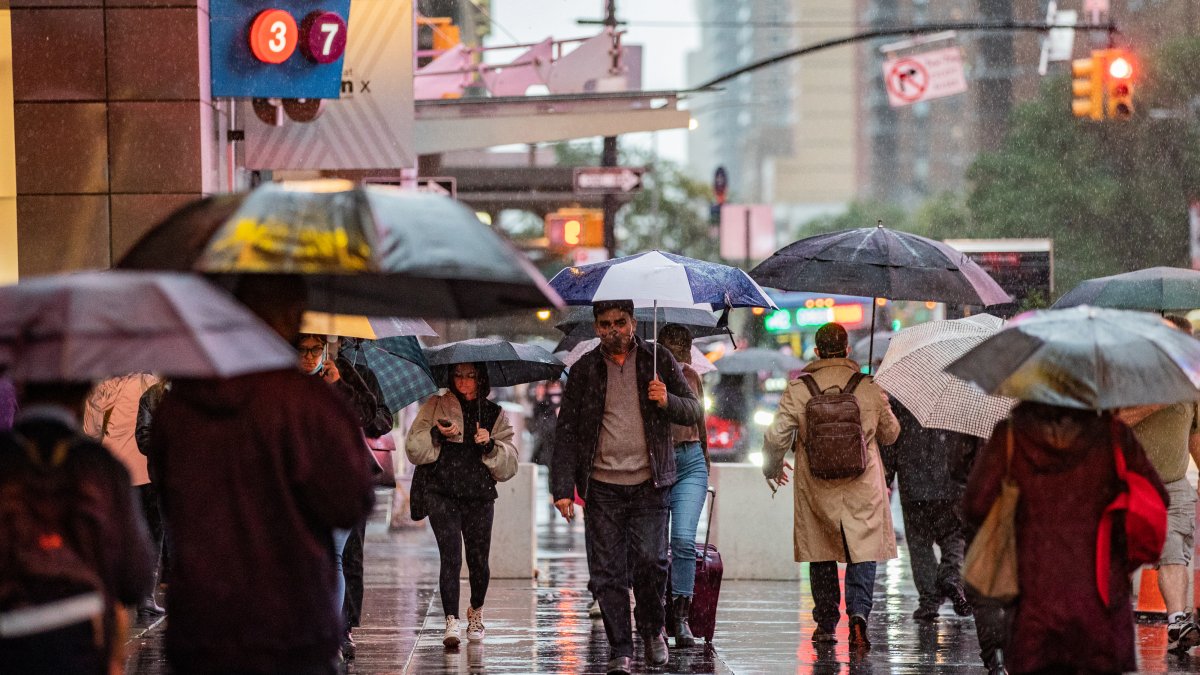
What
to
Know
-
New
York
City
is
on
track
for
more
intense
rainfall,
flooding
and
heatwaves,
according
to
a
new
climate
report. -
By
the
end
of
the
century,
NYC
could
see
up
to
30%
more
annual
rainfall. -
On
average,
there
are
about
370
heat-related
deaths
in
NYC
per
year.
New
York
City
is
on
track
for
more
intense
rainfall,
flooding
and
heatwaves,
according
to
the
latest
report
by
the
Mayor’s
Office
of
Climate
and
Environmental
Justice
(MOCEJ)
and
the
New
York
City
Panel
on
Climate
Change
(NPCC).
The
NPCC
is
an
independent
advisory
board
that
analyzes
local
environmental
impacts,
recommending
actionable
policy
and
climate-based
solutions.
The
fourth
and
new
assessment
was
released
on
Monday,
and
it
projects
that
the
city
will
be
warmer
with
an
increase
in
frequency
and
duration
of
hot
days,
as
well
as
increased
risks
from
rainfall
and
groundwater
flooding.
“We
have
already
seen
about
a
foot
of
sea
level
rise
since
1900
in
New
York
City,
and
now
in
the
next
25
years
by
2050,
that
might
be
a
foot
and
a
half
to
two
feet
higher,
so
what
took
100
years
to
do
is
now
only
taking
25
years
to
do,”
said
Mayor’s
Office
of
Climate
&
Environmental
Justice
Executive
Director
Elijah
Hutchinson
during
a
previous
interview
with
NBC
New
York.
By
the
end
of
the
century,
New
York
City
could
see
up
to
30%
more
annual
rainfall
with
1.5
times
as
many
days
with
more
than
one
inch
of
rain,
based
on
the
report.
Sea
levels
are
projected
to
rise
as
much
as
five
feet
by
2100.
During
Hurricane
Ida
in
2021,
at
least
13
deaths
were
reported
in
the
boroughs,
most
of
whom
drowned
in
basement
apartments.
Besides
devastating
lives
lost,
property
damage
and
stemming
mental
health
issues,
stormwater
and
sewer
overflow
harm
New
Yorkers
with
contaminated
waters.
Dr.
Radley
Horton
is
a
research
professor
at
Columbia
University
Lamont-Doherty
Earth
Observatory
who
warns
similar
storms
like
Hurricane
Ida
are
becoming
more
common.
“The
worst,
rainiest
day
of
the
year
now
contains
about
50%
more
rainfall
than
it
did
just
a
couple
of
generations
ago,”
Dr.
Horton
told
NBC
New
York.
Topography,
historic
stormwater
flow
paths,
and
subsurface
conditions
are
some
factors
that
make
a
zip
code
most
vulnerable
to
extreme
rainfall,
including
areas
low-lying
and
inland.
Southeast
and
Central
Queens,
North
Staten
Island
and
Southeast
Bronx
are
the
most
at-risk
in
the
city
for
dangerous
flooding.
By
the
2050s,
the
MOCEJ
estimates
the
next
major
hurricane,
similar
to
Sandy
in
2012,
could
cost
$90
billion
in
damages
and
economic
loss,
nearly
five
times
the
previous
impact.
On
average,
there
are
about
370
heat-related
deaths
in
the
city
per
year,
according
to
the
report,
leaving
high
temperatures
to
be
the
leading
cause
of
weather-related
deaths,
even
across
the
country.
Hutchinson
says
low-income,
environmental
justice
communities
are
the
most
endangered,
and
within
all
heat-related
city
deaths
last
year,
those
apartments
did
not
have
air
conditioning.
“About
25%
of
some
neighborhoods
in
NYC
don’t
have
access
to
air
conditioning,
which
is
a
huge
problem
when
we
have
temperatures
rising
to
the
degree
that
they
are,”
Hutchinson
said.
Initiating
climate
solutions,
like
expanding
green
spaces,
rethinking
land
use,
zoning,
and
guidelines
for
construction
are
all
aspects
on
Hutchinson’s
mind
when
thinking
about
taking
action
on
what’s
next.
Hutchinson
believes
the
green
economy
in
the
city
is
“set
to
boom,
accounting
for
seven
percent
of
NYC
workforce
by
2040”
which
is
a
tripling
a
jobs
representing
nearly
$90
billion
in
gross
domestic
product.
Chasing
Our
Climate:
On
the
Frontlines is
a
30-minute
documentary
sequel
that
focuses
on
the
weather
disruptions
after
a
tumultuous
year,
including
the
devastating
Canadian
wildfires
and
Hudson
Valley
flooding,
while
featuring
New
York
and
New
Jersey
climate
heroes
who
rush
toward
danger
in
order
to
save
our
communities.
Chasing
Our
Climate is
an
NBC
New
York
special
that
first
aired
in
2022
during
the
10th
anniversary
of
Hurricane
Sandy.
The
four-part
series
highlighted
dozens
of
tri-state
leaders
and
nonprofits
finding
solutions
to
lessening
the
carbon
footprint,
including
the
NYC
Department
of
Sanitation
and
the
Billion
Oyster
Project. Watch
the
first
part
here.