

What
to
Know
-
The
NYPD
moved
in
late
Tuesday
to
clear
protesters
from
Columbia
University’s
occupied
Hamilton
Hall
and
an
encampment
on
the
school’s
lawn,
donning
riot
uniforms
and
tactical
gear
to
make
entry -
No
injuries
were
reported;
about
100
people
were
arrested,
including
around
40
in
the
hall.
Those
in
the
hall
face
burglary,
criminal
mischief
and
trespassing
charges;
others
face
disorderly
conduct -
Hours
earlier,
officials
at
all
levels
of
government
had
called
on
the
protesters
to
clear
out
to
avoid
further
escalation;
the
protesters
did
not
heed
their
demands
and
Columbia
University
said
it
was
“left
with
no
choice”
but
to
call
in
police
as
the
situation
became
“untenable”
Dozens
of
protesters
were
arrested
—
yet
no
injuries
reported
—
when
hundreds
of
NYPD
officers
in
riot
gear
descended
on
Columbia
University
late
Tuesday,
using
tactical
strategies
to
clear
the
occupied
Hamilton
Hall
and
lawn
encampment
at
the
request
of
the
college,
as
anti-war
demonstrations
at
U.S.
campuses
reached
an
inflection
point.
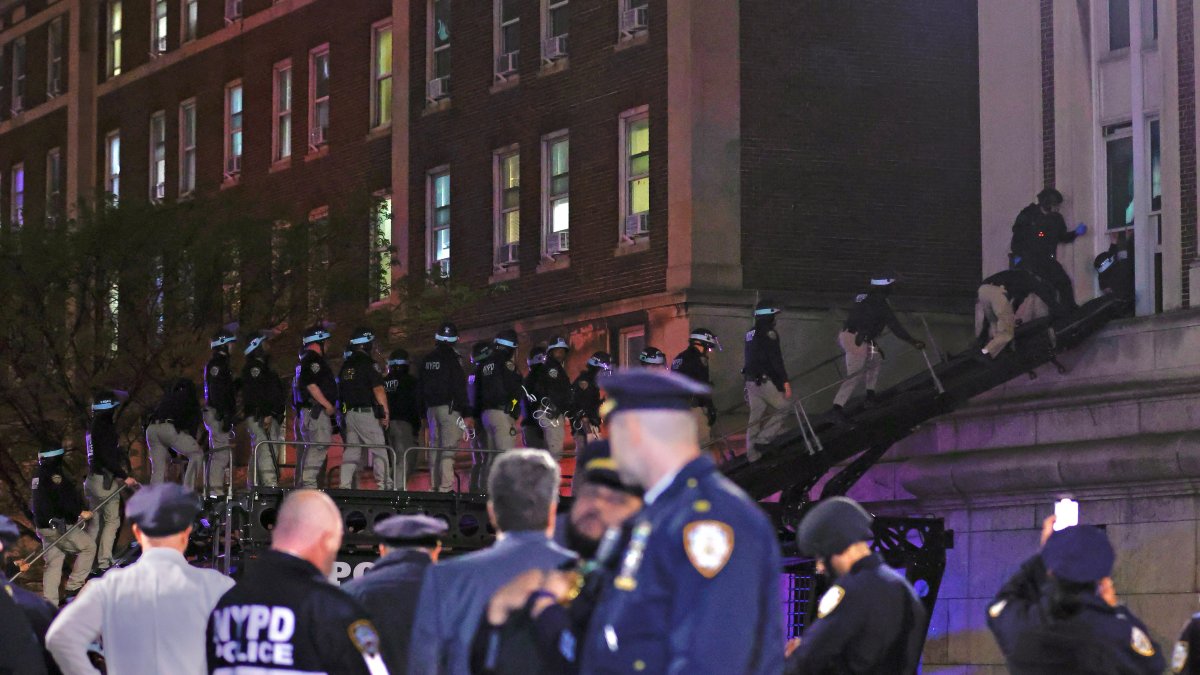
Dramatic
video
showed
heavily
geared
officers
using
a
ladder
truck
and
climbing
through
a
window
to
access
the
historic
hall,
known
for
its
role
in
an
anti-Vietnam
War
protest
decades
ago,
where
protesters
had
barricaded
themselves
after
smashing
windows
and
doors
to
break
in
less
than
24
hours
before.
Police
used
“flashbangs,”
or
distraction
devices,
to
quell
any
potential
response
by
the
protesters
as
they
moved
in.
They
said
tear
gas
was
not
used.
A
news
conference
is
planned
for
Wednesday
morning.
Columbia,
which
had
faced
backlash
for
calling
in
the
NYPD
as
initial
protests
ratcheted
up
last
month,
made
the
decision
to
call
officers
back
late
Tuesday
“with
the
utmost
regret”
to
dissipate
what
university
officials
described
had
become
“a
clear
and
present
danger
to
persons,
property
and
the
substantial
functioning
of
the
university.”
Read
the
full
letter
here.
A
shelter-in-place
alert
was
issued
on
the
campus
ahead
of
and
throughout
the
operation.
Roughly
40
of
the
approximately
100
people
arrested
at
Columbia
Tuesday
had
been
in
Hamilton
Hall,
mostly
on
the
first
floor.
The
occupying
protesters
will
be
charged
with
third-degree
burglary,
criminal
mischief
and
trespassing.
Protesters
participating
in
the
encampment
on
the
lawn
will
be
charged
with
trespassing
and
disorderly
conduct.
It’s
not
clear
how
many
of
those
arrested
at
Columbia
students.
Some
may
be
expelled.
Investigators
had
said
evidence
indicated
that
outside
agitators
co-opted
the
protest
and
were
largely
responsible
for
the
escalation.
Other
students
who
refused
to
comply
with
university
policy
on
Tuesday
and
over
the
course
of
the
weeks-long
protests
face
suspension,
meaning
their
college
IDs
will
be
deactivated
and
they
can’t
finish
the
semester.
Finals
wrap
up
this
week.
The
school
has
asked
police
to
remain
on
campus
through
May
17
to
ensure
additional
encampments
do
not
pop
up
and
to
maintain
order.
Graduation
is
scheduled
for
May
15.
Restrictions
limiting
access
to
Columbia
to
one
entry
point
—
at
116th
Street
and
Amsterdam
—
and
essential
personnel
and
dorm-dwelling
students
were
implemented
early
Tuesday
in
response
to
the
protests
and
remain
in
effect
for
now.
New
York
police
officers
arrived
at
Columbia
University
shortly
after
9
p.m.
Tuesday
night
to
clear
protesters
barricaded
inside
Hamilton
Hall.
Anti-war
protests
escalate
in
NYC,
elsewhere
What
happened
at
Columbia
Tuesday
night
was
preventable,
officials
have
said.
Earlier
in
the
evening,
Mayor
Eric
Adams
and
NYPD
Commissioner
Edward
Caban
made
an
impassioned
plea
to
Columbia
protesters
to
vacate
Hamilton
Hall
“before
the
situation
escalates”
further.
“We
cannot
and
will
not
allow
what
should
be
a
peaceful
gathering
to
turn
into
a
violent
spectacle
that
serves
no
purpose,”
Adams
said.
“We
cannot
wait
until
this
situation
becomes
even
more
serious.
This
must
end
now.”
That
news
conference
followed
similar
calls
to
action
from
New
York
Gov.
Kathy
Hochul
and
from
the
White
House,
which
condemned
the
escalation
earlier
Tuesday.
“President
Biden
respects
the
right
to
free
expression,
but
protests
must
be
peaceful
and
lawful,”
a
statement
said.
“Forcibly
taking
over
buildings
is
not
peaceful
–
it
is
wrong.”
PHOTOS:
Columbia
University
student
protesters
take
over
Hamilton
Hall
Police
have
swept
through
campuses
across
the
U.S.
over
the
last
two
weeks
in
response
to
protests
calling
on
universities
to stop
doing
business
with
Israel or
companies
that
support
the war
in
Gaza.
There
have
been
confrontations
and
more
than
1,000
arrests.
In
rarer
instances,
university
officials
and
protest
leaders struck
agreements to
restrict
the
disruption
to
campus
life
and
upcoming
commencement
ceremonies.
The
nationwide
campus
protests
began
at
Columbia
in
response
to
Israel’s
offensive
in
Gaza
after
Hamas
launched
a
deadly
attack
on
southern
Israel
on
Oct.
7.
Militants
killed
about
1,200
people,
most
of
them
civilians,
and
took
roughly
250
hostages.
Vowing
to
stamp
out
Hamas,
Israel
has
killed
more
than
34,000
Palestinians
in
the
Gaza
Strip,
according
to
the
Health
Ministry
there.
As cease-fire
negotiations appeared
to
gain
steam,
it
wasn’t
clear
whether
those
talks
would
lead
to
an
easing
of
protests.
Israel
and
its
supporters
have
branded
the
university
protests
as
antisemitic,
while
Israel’s
critics
say
it
uses
those
allegations
to
silence
opposition.
Although
some
protesters
have
been
caught
on
camera
making
antisemitic
remarks
or
violent
threats,
organizers
of
the
protests,
some
of
whom
are
Jewish,
say
it
is
a
peaceful
movement
aimed
at
defending
Palestinian
rights
and
protesting
the
war.